Shemnei Atzeret and Simchat Torah
Part of an ongoing series entitled Hidden Sparks Beneath the Surface
By Betty Tabor Givin aka Elisheva Tavor
A parable: Once upon a time, there was a king who invited all of his children to a lovely banquet that lasted several days. When the banquet was over and it was time for them to leave, the
king affectionately said to them, “My children, your departure is difficult for me. Please tarry with me one more day” (Rashi on Leviticus 23:26, from the Midrash).
The king was requesting an atzeret, an additional day with His beloved children! It is significant to notice that in the parable the king did not say “our parting” is difficult for me; instead, he said “your parting” is difficult for me. If we interpret this story to illustrate HaShem’s relationship with us, we know that He is never the one who leaves, for His presence is always with us. But it is we who move away from Him when we fail to maintain that special “Gd consciousness” as we go about the routines of our daily lives. From time to time, however, we may be taken aback as it comes flooding into our hearts like one of those lovely “aha” moments. Like a hidden spark beneath the surface, it jolts us back into that profound awareness of His Divine Presence and then propels us forward with renewed strength and energy. Then we can say with our forefather Ya’akov (Jacob), after his incredible encounter with the Malak, “Surely, YHVH is in this place and I did not know it!” (Genesis 28:16). During the seven days of Sukkot we were very much aware of this amazing feeling as we spent time in our sukkahs, thinking and meditating on His
presence there with us, sheltering us under the “shadow of His wings” (Psalm 91) just as He protected the children of Israel in the wilderness with the symbolic “clouds of glory” over their
heads (Exodus 13:20-22). But after those lovely seven days of Sukkot are over, the question is: “Where do we go from here?” Do we just pick up where we left off or are there additional ideas, concepts—even more of those hidden sparks beneath the surface—to be discovered that would be well worth our consideration before
The Seventh Month—Tishrei
Taking leave of this glorious season? Perhaps our Father had this in mind when He gave us, His children, this additional day, which the Torah refers to as Shemnei Atzeret, to fellowship with Him and with one another. But before we consider these questions and delve into some of their spiritual implications, let us first go to the Torah to see what we can glean. Then we will address some of the traditions that have developed through the centuries.
From the Torah
There are only a few specific biblical references to the festival of Shemnei Atzeret. The first is in Leviticus 23:36: “On the eighth day shall be a holy gathering [mikrah kodesh] to you…and you shall do no servile work.” In the next reference, just three verses later, we find this day referred to as a Sabbath in connection to Sukkot: “On the first day [of Sukkot] shall be a Sabbath and on the eighth day shall be a Sabbath” (v. 39). In both references the day is referred to as a mikrah kodesh, a holy gathering that, like the other festivals, sets it apart as a time of celebration. Rabbi Hirsch refers to this day as a day of “abiding” (Numbers 29:35). The festival of Sukkot in connection with that of Shemnei Atzeret is also found in the Nevi’im, the Prophets, in the book of Nehemiah in reference to the time when Ezra and Nehemiah gathered the people together in the seventh month after their return from Babylon to afford them the opportunity to listen to the reading of the Torah regarding the commandment to construct sukkahs for the festival of Sukkot—a festival that they had not
kept since the days of Joshua: “And all the congregation of those who were come back out of the captivity made booths [sukkot] and dwelt in the booths…and there was very great gladness. Also day by day, from the first to the last day, he [Ezra], read in the book of the Torah of Gd. And they kept the feast seven days; and on the 144 Hidden Sparks Beneath the Surface eighth day [shemnei atzeret] there was a solemn assembly according to the prescribed form” (Nehemiah 8:17-18). There is also a reference to Sukkot and Shemnei Atzeret in the book of 2 Chronicles at the time when King Solomon finished building the Holy Temple and dedicated it to HaShem: “At that time Shlomo kept the feast for seven days and all Yisrael with him, a very great congregation…And on the eighth day [shemnei atzeret] they made a solemn assembly” (2 Chronicles 7:8-11; see also 1 Kings 8:51-9:1). At the close of King Solomon’s heartfelt dedicatory prayer to HaShem, He offers praise to YHVH for His constant care and adjures that “all the people of the earth may know that YHVH is Gd and that there is no other” (v. 60)! It is of interest to note that in the beginning of the account of the completion of the Holy Temple, the text identifies the feast as occurring “in the month of Etanim [Ethanim], which is the seventh month” (Ibid. v. 2). This name is of Hebrew etymology and is related to yatan, which means to “flow continuously” (https:// www.abarim- publications.com/Meaning/Ethanim.html#:~:). This is the only reference to this name in the entire Hebrew Bible. Could this possibly be related to the symbolism attached to the number eight, as a “carrying forth” to a new dimension…another hidden spark beneath the surface?
The Jewish Encyclopedia states: “‘’aẓeret’ denotes ‘day of assembly,’ from ‘’aẓar’ = ‘to hold back’ or ‘keep in;’ hence also the name ‘’aẓeret’ given to the seventh day of Pesaḥ (Deut. xvi.8). Owing, however, to the fact that both the eighth day of Sukkot and the seventh day of Pesaḥ are called ‘’aẓeret,’ the name was taken to mean ‘the closing festival’” (“Shemini Atẓeret,” p. 269). Rabbi Avraham Finkel quotes Rabbi Hirsch on the meaning of atzeret: “The word atzeret is derived from atzar, to collect, to store. The purpose of this festival is to recapitulate and to store in our memories everything we experienced and gained during the preceding Yamin Tov [festival days], so that we will carry out the resolutions we have made, will retain the spiritual elevation we have reached, and will not lose them in the everyday life to which we are about to return” (Essence of the High Holy Days, p. 98).
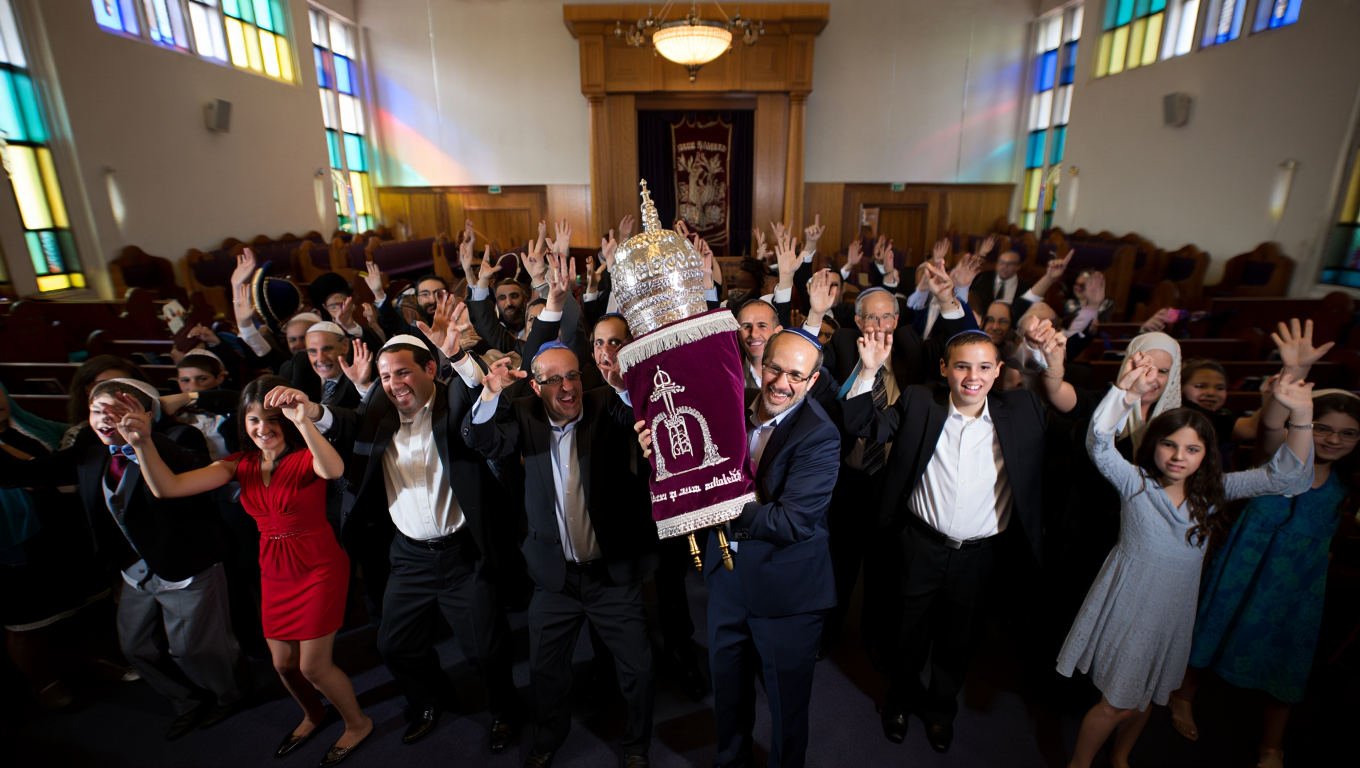
The question arises: Is Shemnei Atzeret a festival separate from the seven days of Sukkot or is it simply a grand culmination—the last great day of Sukkot? Differences of opinion have been voiced by the rabbinical sages down through the centuries, with no clear consensus. But when it comes right down to it, how important is it really? All the sources agree that Shemnei Atzeret is indeed a yom tov (a designated festival day). Shouldn’t that be the focus and the true significance of the celebration? According to the Torah, we joyously celebrate Sukkot by dwelling in our sukkahs for seven full days, and then, on top of that, we are given an additional day, Shemnei Atzeret, the eighth day, in which to celebrate even more and attain a higher level. This day is like a special gift from our loving Gd and Father, YHVH, HaShem, the awesome Creator of the universe!